



The Schetinin School Phenomenon and its Modern Successors
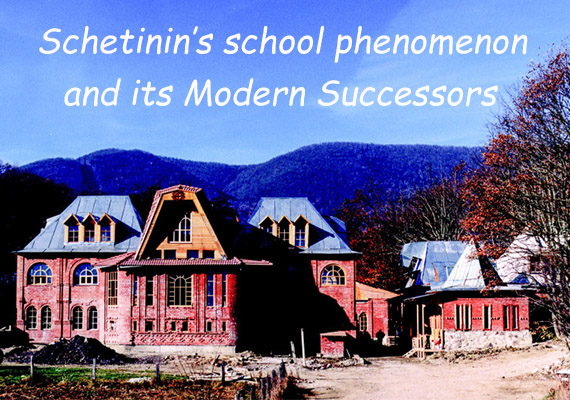
The Miracle of True Education
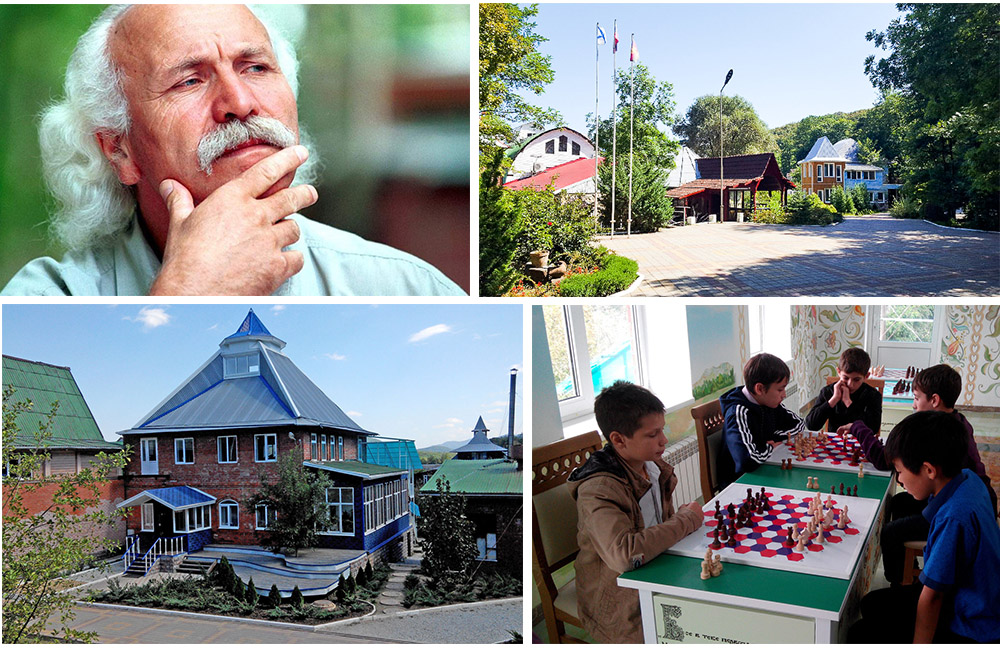
The Schetinin's School (officially the "Boarding Lyceum for the Comprehensive Development of Children and Adolescents' Personality," Tekos settlement, Krasnodar region) represents a unique and radical pedagogical experiment in post-Soviet Russia. Its institutionalization in 1994 was made possible through the joint efforts of its founder, innovative educator Mikhail Petrovich Schetinin, and Alexander Alexandrovich Ostapenko, an academician of the Russian Academy of Education (RAO), who served as its scientific curator and administrative patron.
The peak of the institution's public recognition occurred in the late 1990s and 2000s. International acknowledgment, expressed through a positive evaluation by UNESCO (1999), coincided with growing popularity within Russia. This popularity was partly fueled by references to the school within the popular book series "The Ringing Cedars of Russia" by V.N. Megre. The idea of a "Kin's school" presented in these texts contributed to the formation of a community of followers around the institution, significantly impacting its social and media status.
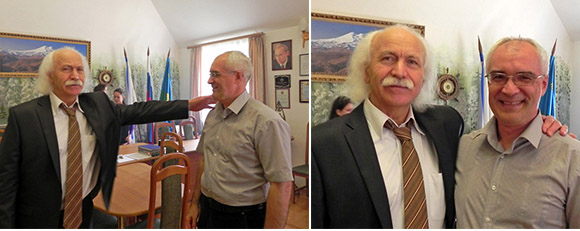
Here, I would like to include a couple of photographs from my personal archive, dated 2011. At that time, the author of this article brought another group of foreigners inspired by the ideas of the Kin's School to visit the Shchetinin School, and Mikhail Petrovich himself invited me to join him for a commemorative photo. :)
A critical factor in the project's sustainability was the personal patronage of A.A. Ostapenko within academic and bureaucratic structures. The loss of this support following his departure from leadership positions, and the subsequent passing of both key figures in 2019, led to an institutional crisis and the de facto cessation of the original school model's activities.
1. Theoretical and Methodological Foundations of the Pedagogical System
M.P. Schetinin's concept, presented as the "Russian Kin's School," was based on an anthropocentric approach. Here, the goal of education was not the assimilation of a body of knowledge, but the formation of a holistic personality integrated into the context of national cultural tradition. This model was positioned as an alternative to the prevailing formalism and subject fragmentation of traditional schooling.
* The Axiological Priority of Uphringing: The foundation was the idea of "vospitaniye" (upbringing/nurturing) as the "feeding" of spiritual, moral, and patriotic qualities within the model of an extended family community ("Kin").
* Deconstruction of the Traditional Form: The system involved rejecting the basic elements of class-lesson organization: fixed schedules, bells, and rigid division by age and subject.
* The Concentration Method ("Immersion"): The central didactic tool was the intensive, deep study of a single subject area over an uninterrupted cycle (5-10 days), aimed at achieving a synergistic effect and holistic perception.
* The Principle of Integrating Cognitive and Transformative Activity: Theoretical learning was synthesized with practice: natural sciences were mastered through construction, humanities through the lens of crafts, folklore, and agricultural labor.
2. Organizational Structure and Way of Life
* Mixed-Age Educational Communities: Grouping students of different ages simulated natural social structures, promoting mutual learning, empathy, and a sense of responsibility.
* Mechanisms of Co-governance and Autonomy: Students were directly involved in decision-making regarding internal life, daily routines, and the learning process, seen as a key element in developing civic competence.
* Criterion-Referenced Assessment System: The rejection of grades was compensated by procedures of public project defense and creative reporting. Individual educational trajectories were built within the framework of the state standard but accounted for personal characteristics and interests.
* Aesthetic-Physical Synthesis as the Basis of Daily Life: Elements of folk culture (choral singing, dance), martial arts, and systematic physical labor constituted not an extracurricular addition, but the mandatory, rhythm-forming basis of the school's life.
3. Scholarly Legacy and Influence on Pedagogical Thought
* Despite the cessation of the original institution's activities, M.P. Shchetinin's legacy continues to be a subject of scholarly interest and influences the practice of alternative education.
* The school is a classic case study of implementing a holistic educational model outside rigid bureaucratic frameworks.
* Individual methodological elements (concentrated learning (Immersion), mixed-age groups, integration of labor and study) have been adapted in the sphere of non-formal, family, and supplementary education.
* Schetinin's pedagogical system is an object of academic research and retains its discursive potential within the professional community.
* An extensive corpus of audiovisual materials (documentaries, lectures, interviews) ensures the preservation and transmission of the project's ideas.
4. Critical Reflection and Contentious Aspects
An academic analysis of the school's activities requires consideration of existing criticism, which primarily focuses on the following aspects:
* The Problem of Institutional Sustainability: The high degree of the model's dependence on the founder's charisma and authority raised doubts about its reproducibility and scalability.
* Isolationism and Ideological Orientation: Functioning as a relatively closed community with a pronounced ethno-cultural and confessional component limited its potential for broad replication and raised questions about the model's universality.
* The Question of Systematic Knowledge: A number of specialists in didactics expressed skepticism regarding the "immersion" method's ability to ensure the uniform and sequential mastery of the entire body of knowledge prescribed by the federal state educational standard.
5. Modern Successor Projects
Currently, two organizations position themselves as successors to Shchetinin's pedagogical tradition.
* The Educational Center in Tekos Settlement (Krasnodarskiy krai, Gelendzgik region). Following the reorganization of the original institution and the transfer of most of its territory to the "Nastavnik" children's camp, a boarding school for 50 students continues to operate on the remaining site (several buildings) under the leadership of the founder's son, Pyotr Shchetinin, declaring fidelity to the principles of the original system.
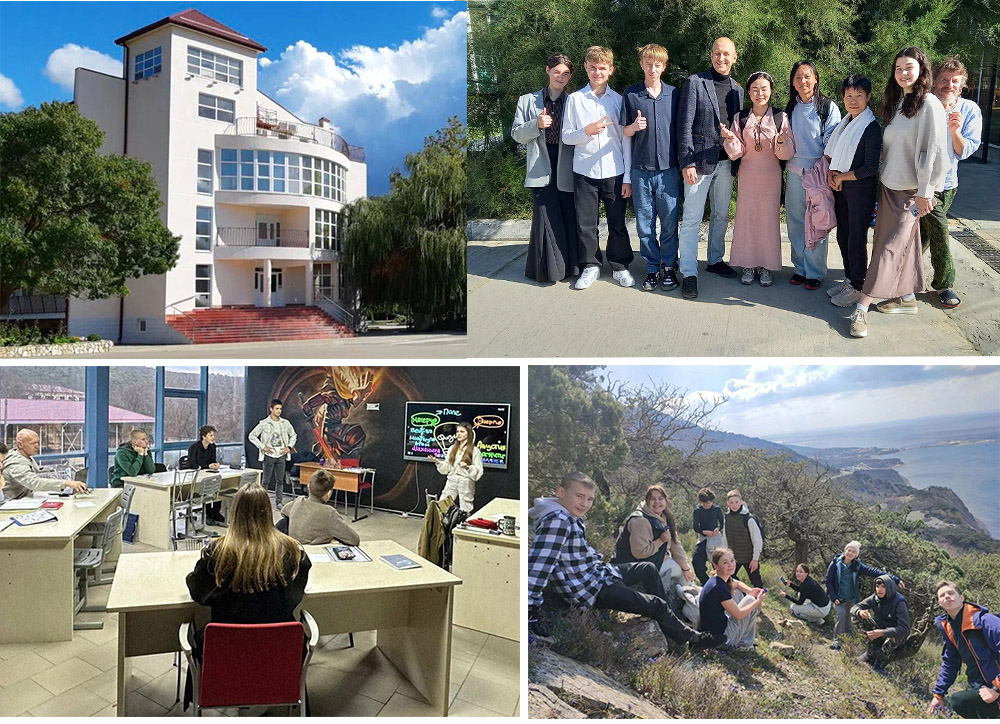
* The Autonomous Non-Profit Organization "Development Center 'Slovo'" in Sukko settlement (Krasnodarskiy krai, Anapa region). Founded in 2020 by former Schetinin's school administrative director Vitaliy Nikolayevich, this center, which rents premises at the Children's Health Camp "Energetik" and has over 100 students, claims to comprehensively implement the key elements of Shchetinin's methodology, including concentrated (immersion) learning, mixed-age groups, and the synthesis of academic, labor, and creative activities.
* Furthermore, the school in the Sukko settlement has plans to actively promote the alternative teaching methods developed by M.P. Shchetinin. This includes organizing outreach sessions where a small group of students, accompanied by a teacher, will travel to other regions of Russia and abroad to demonstrate and share their educational practices.
(!) Dear friends, if you want to visit any of these centres, please contact Yuriy at [email protected] and we will arrange your trip to Schetinin's school Successors as well as to other amazing, spiritual and inspiring places of Krasonadar region of Russia, like the Dolmens and Russian Kins domains (family homesteads): https://ecominded.net/vedic-russia-ethno-tour
If you like this article please help keep us going, no matter the amount, your donation makes a difference!

Leave your comment