



The Fokin hoe Flat Cutter: Hold It Correctly
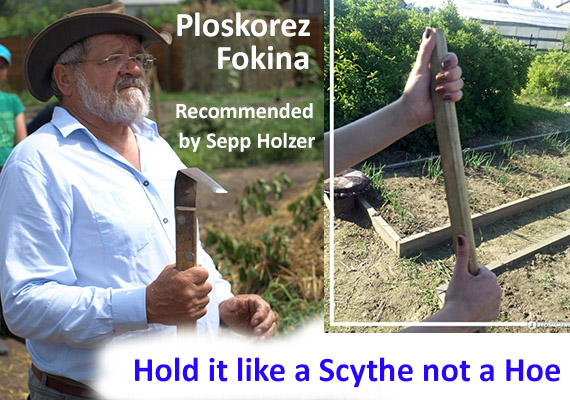
If you’ve recently purchased a Fokina flat cutter (Ploskorez Fokina) and found yourself wrestling with the soil, sore in the back, and underwhelmed by the results—you are not alone. But here’s a hard truth that transforms everything: You are likely holding it wrong.
The genius of this tool is not that it’s a “better hoe.” It’s that it is not a hoe at all. To unlock its potential, you must forget everything you know about chopping weeds and learn to move like a patient scythe-wielder.
The “Scythe Grip” vs. The “Hoe Grip”
The difference between effortless weeding and back-breaking labor comes down to one simple detail: where your thumbs point.
✅ The Correct Way (Hold it like a scythe)
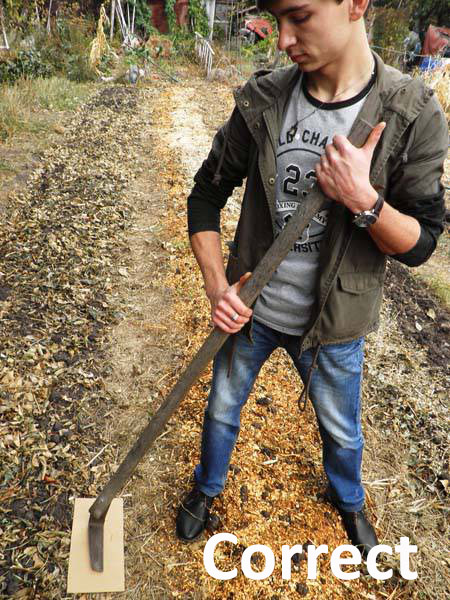
The difference between effortless weeding and back-breaking labor comes down to one simple detail: where your thumbs point.
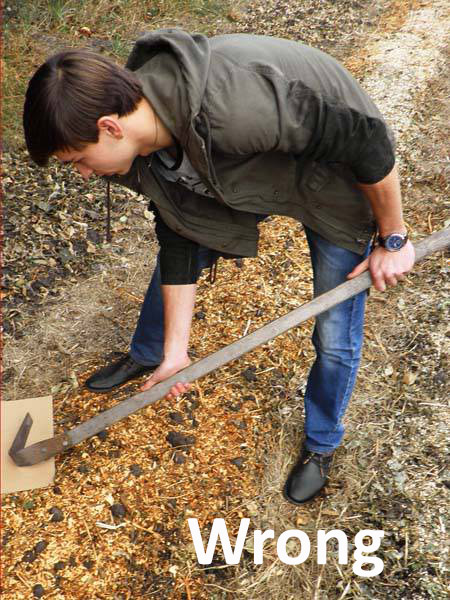
❌ The Common Mistake (Holding it like a hoe)
* The stance: Bent over “in three folds” (back, hips, and knees all painfully curved).
* The grip: Thumbs point down on the handle.
* The motion: Chopping, hacking, “motyging” – slamming the blade into the earth.
* The result: The blade dives 10 cm or more deep. You are not weeding; you are tilling. This brings dormant weed seeds up to the surface, creating an explosion of new weeds. Plus, because the flat cutter is light, you have to exert more force to bury it than you would with a heavy hoe. You are working 2–3 times harder for worse results.
A Gardener’s Confession: The Tool That Eliminated Its Own Job
Let me tell you what happened when I finally corrected my grip.
I had always struggled with weeding. My neighbor and I would both tackle our beds on the same morning. She wielded her hoe the usual way—“like a stove grabber,” thumbs down. I decided to experiment. I took my long-handled Fokina flat cutter, stood straight, pointed my thumbs up, and mimicked a slow, reserved scythe motion.
The blade skimmed the surface, just 2–3 cm deep.
After the first weeding, something strange happened: my beds stayed clean. The seeds of existing weeds had already sprouted before my first pass—I had cut them down easily. And because I hadn’t churned up the deep soil, I didn’t bring any new seeds to the surface. The flat cutter had, in a sense, eliminated its own future work.
My neighbor, on the other hand, chopped vigorously with her hoe (thumbs down, bent over). Her blade plunged 10 cm or more into the soil. She felt she had been thorough—but within a week, her garden was more weeded than before she started. She had lifted a fresh crop of seeds from the deep. Her second weeding was even more urgent than the first.
The Golden Rule of the Fokina Flat Cutter
Repeat this until it becomes habit:
The Fokina flat cutter is not a hoe, not a motyka, not a chopper. Do not “motyg” the earth with it.
Your tool is a surface skimmer. A soil scalpel. A gentle, sliding blade.
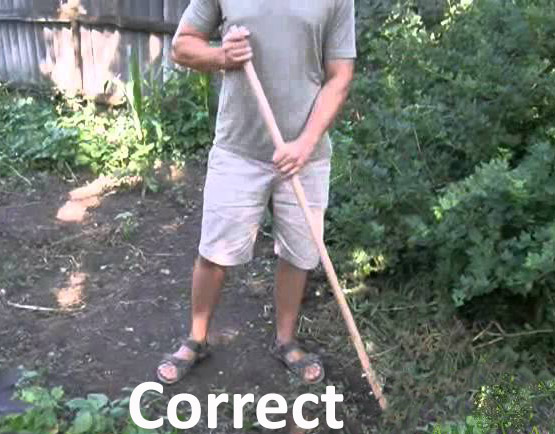
* Thumbs up → Back straight → Shallow cut → Clean beds.
* Thumbs down → Back bent → Deep trench → Weed explosion.
The tool itself is light and brilliant. But it cannot fix a grip that turns a scythe into a hammer.
So tomorrow morning, before you step into the garden, look down at your hands on the handle. If your thumbs point down—stop. Turn them up. Straighten your back. And let the flat cutter glide. You might just find it has given you the cleanest, easiest season of your life.
Happy weeding—without the weeds.
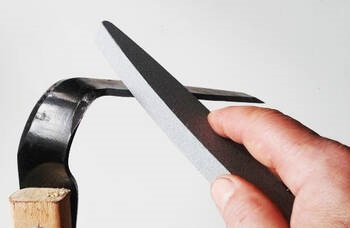
Oh, and by the way—don't forget to sharpen the blades regularly for maximum tool efficiency!

Leave your comment