


Three Paths to Harmony
Three Paths to Living in Harmony with Nature – Which One Calls to You?
Dear friends,
Have you ever dreamed of leaving the city behind and living closer to nature? Perhaps you've imagined waking up to birdsong, growing your own food, and feeling the rhythm of the seasons rather than the pulse of traffic and notifications. If this is your dream, then maybe you've already heard about Kin's Domains. And if you haven't – well, you're in for a treat. Stick around.
A Quick Note on Kin's Domains
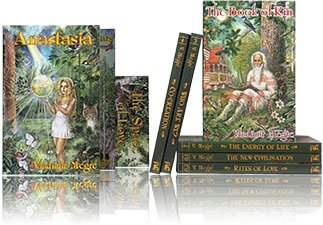
A Kin's Domain (also called a "Family Homestead" or "Space of Love") is a minimum of one hectare – about 2.5 acres – of land owned and nurtured by a family or individual seeking a self-sufficient, nature-centered life. This idea was introduced by Anastasia in the Ringing Cedars of Russia book series at the dawn of the 21st century and has since grown into a nationwide movement, with over 400 eco-settlements thriving across Russia today – plus hundreds of Anastasia-inspired communities and groups in the Western world, as the books have been translated into more than 25 languages. Please feel free to get all RCoR books for free here: https://ecominded.net/books
Why one hectare? It's considered the ideal balance – large enough to sustain a family's needs for generations through permaculture, food forests, and natural building, yet small enough to be managed without industrial farming or harmful chemicals. Each domain is designed as a self-reliant micro-paradise where humans live in partnership with nature, not in domination of it.
Importantly, each family owns their land outright – it is not communal property. This ensures deep, long-term commitment to restoring and beautifying the land. Yet independence doesn't mean isolation: neighboring domains form supportive networks, sharing lakes, schools, community centers, and forests. This balance – private land for self-sufficiency, shared land for unity – creates resilient, thriving communities. You can read more and watch some videos about it here: https://ecominded.net/russian-family-homesteads
But Let's Be Honest for a Moment
Despite the impressive progress in promoting Anastasia's ideas about Kin's Domains – roughly 400 eco-settlements developing in Russia alone – the pioneers of this movement have also faced considerable challenges over the past quarter-century. Financial struggles (job instability, lack of funds), social hurdles (no kindergarten, no school), and personal conflicts (disagreements between families within eco-settlements) have all taken their toll. Not to mention that developing, improving, and subsequently maintaining 1 to 1.5 hectares of land requires significant physical effort – effort that not every individual or family can realistically sustain.
You can read our analytical article about these facts here: https://ecominded.net/our-story-space-of-love
So, with all that in mind, today I want to share three very different real-life examples of what living in harmony with nature can actually look like. Each one represents a different point on the spectrum – from the most radical simplicity to a comfortable family homestead with a thriving household and business. Think of it as a menu – except you can't order all three at once. Well, you could try, but I wouldn't recommend it.
The Forest Hut: Life at Its Most Elemental
Imagine a dwelling of just 4 square meters – a simple structure of clay and straw with a small sleeping platform and a wood-burning stove. This is home, at least during the winter months, for my friend Valeriy, who lives on his 1.5-hectare estate in the Kin's settlement of Vedrussia in southern Russia.
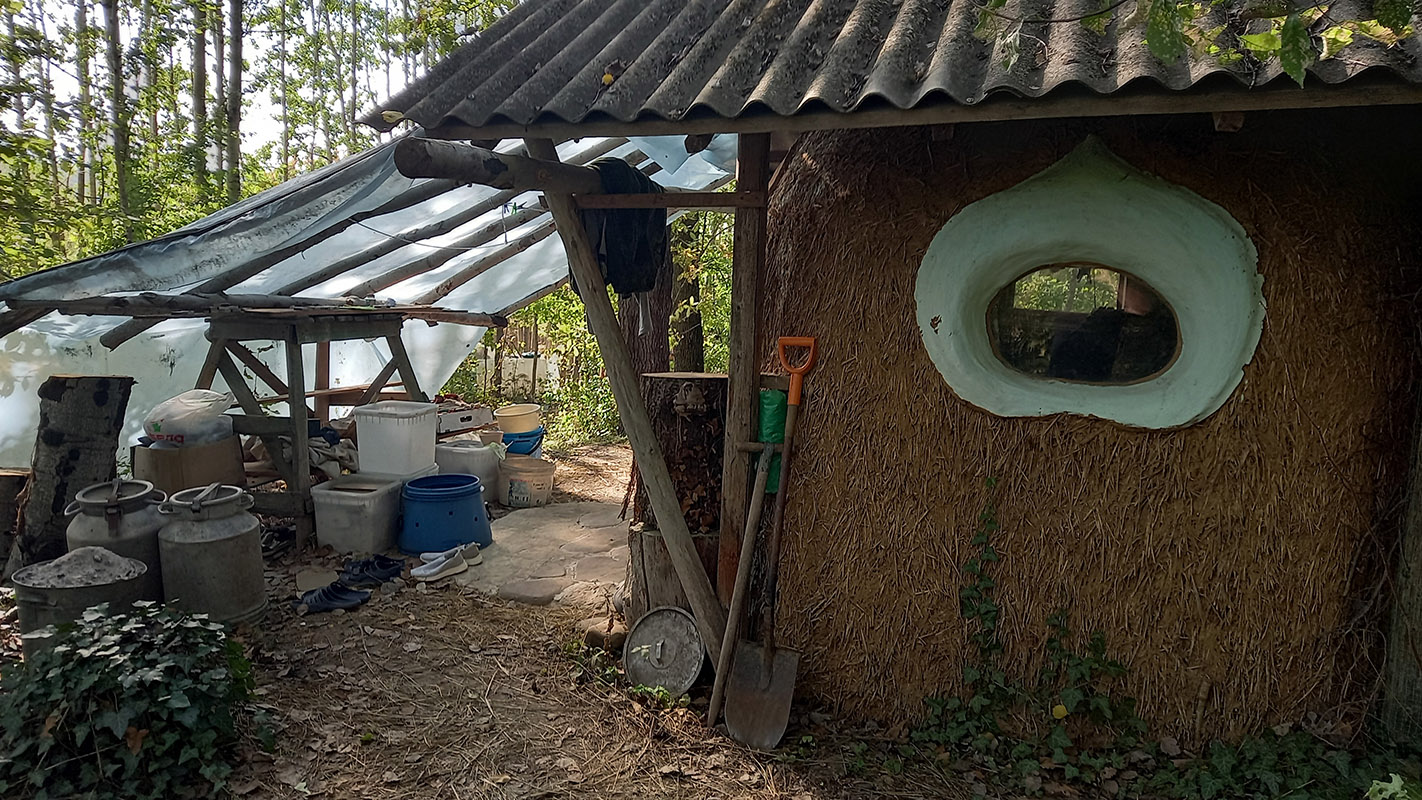
For roughly eight months of the year, Valeriy doesn't sleep indoors at all. He sleeps outside under his favorite trees – an oak and an apple tree – throwing a simple tarp over himself when it rains. His diet consists mainly of mushrooms, vegetables, and dried fruits grown on his own land. He keeps log hives for bees and produces just enough honey for himself. No fuss, no five-star hotel reviews.
This is perhaps the closest approximation to the life described in the Ringing Cedars of Russia book series – a life of radical simplicity, direct contact with nature, and minimal dependence on the material world.
But here's what might surprise you: Valeriy hasn't cut himself off from society. He runs an international business from his tiny straw hut, cultivating and selling seedlings of around 100 different conifer species from around the world. A man who sleeps under oak trees and dries his apples on his bed is also a successful entrepreneur. Some might call it eccentric. Valeriy would probably just call it Tuesday.
Read more here: https://ecominded.net/forest_hut
The House over the River: Nature and Comfort in Balance
Now let me show you a different path – one that my own family has chosen.
Our homestead sits on a small plot (1,000 square meters) in an ordinary village – not in an open field or remote forest. We have electricity, gas, and running water. The school and shops are within walking distance. And yet, our lives are deeply intertwined with nature: the river is just 50 meters away, and a forested area with plenty of trees runs along its banks.
.jpeg)
Our garden provides us with tomatoes, cucumbers, zucchini, eggplants, pumpkins, parsley, dill, basil, and coriander, alongside an abundance of apples, pears, figs, plums, walnuts, and hazelnuts – plus flowers in every season. A hedgehog visits us regularly – we've named him Boris, though he hasn't confirmed whether that's his actual name. We watch our dream home take shape year by year, season by season, enjoying both the beauty of the natural world and the comforts of modern life.
This is not a story of deprivation or radical self-denial. It's a story of balance – of finding a way to live close to the land while still being part of a community, with access to education, healthcare, and the conveniences that make life easier, especially for families with children.
Some of you may know that the original dream, inspired by the Ringing Cedars series, was to create a "Space of Love" on a full hectare of land in a Kin's settlement. That was my dream too, for many years.
I returned to Russia from New Zealand in 2008 with exactly that vision. I bought a 1.5-hectare plot in a Kin's settlement in central Russia. I planted trees. I cleared pathways. I dreamed.
But reality, as it often does, had other plans.
Without sufficient funds, without a car, without the ability to manage such a large territory, our hectare remained largely undeveloped. We struggled to survive rather than thrive. After years of effort, we had to admit a hard truth: dreaming about a Kin's Domain and actually living in one are two very different things. It's a bit like the difference between watching a cooking show and actually cooking Thanksgiving dinner for twelve people. One is inspiring; the other requires a lot of dishes.
We observed that in Vedrussia, one of the largest and most developed Kin's settlements in Russia with over 200 families, most residents have managed to develop only 1000–1500 square meters of their hectares – no more than 10% of the land. The rest remains overgrown, requiring regular mowing for fire safety. About half of the settlers visit their domains only occasionally, and some haven't been there in years. Read more here: https://ecominded.net/our-story-space-of-love
We came to understand something important: the most meaningful "Space of Love" is not measured in hectares. It is created where you actually live, where you put your hands in the soil every day, where you watch your plants grow and your children play.
So we made a conscious choice. Instead of a hectare we couldn't manage, we chose a small parcel – 1000 square meters – in an ordinary village with all the utilities, within walking distance of schools and shops. On this land, we cultivate a garden of 400–500 square meters, plant fruit trees, and create our own small Space of Love. Please check some photos and videos about our path here:
* https://ecominded.net/dream-home-in-progress
* https://ecominded.net/house-over-the-river
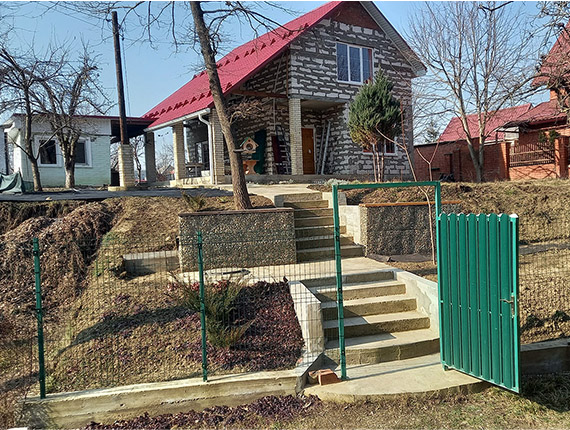
Anastasia's dachniks – summer residents – have successfully created their own small Spaces of Love on plots as small as 500–600 square meters. We believe this is not a betrayal of the dream, but its practical realization. After all, a small garden that you actually tend is worth more than a hectare of weeds that you visit twice a year.
The Family Homestead: A House with All Amenities on 1.5–2 Hectares
But there is also a third path – one that many families with children find most appealing (if they have sufficient funds, of course).
Imagine a comfortable, well-built house with all modern amenities – central heating, running water, electricity, a proper bathroom – designed for a family of four, five, or more. This house sits on a plot of 1.5 to 2 hectares of land within a Kin's settlement or a rural area with good access.
This is not a hut or a small village parcel. This is a full-fledged family homestead with a thriving household.
On this land, you would have a large vegetable garden providing fresh produce for the family year-round. There would be fruit trees – apples, pears, plums, cherries – and nut trees – walnuts, hazelnuts, maybe even cedars. You might keep chickens, geese, turkeys, perhaps a cow or goats. The goal is food security – your family eats what you grow and raise, with surplus for sharing or selling.
But this path goes beyond self-sufficiency. The fruit and nut trees can become a source of income – a business selling seedlings, nuts, dried fruits, or honey. The household becomes not just a place to live, but a productive enterprise that supports the family.
This path requires significant investment – both financial and in terms of time and physical effort. It also requires knowledge: how to care for animals, how to manage an orchard, how to run a small business. And it requires a partnership – this is not a path for a single person living in a forest hut, but for a family working together. Ideally, a family that genuinely enjoys each other's company. Because there's no escaping to the office when the goats need milking.
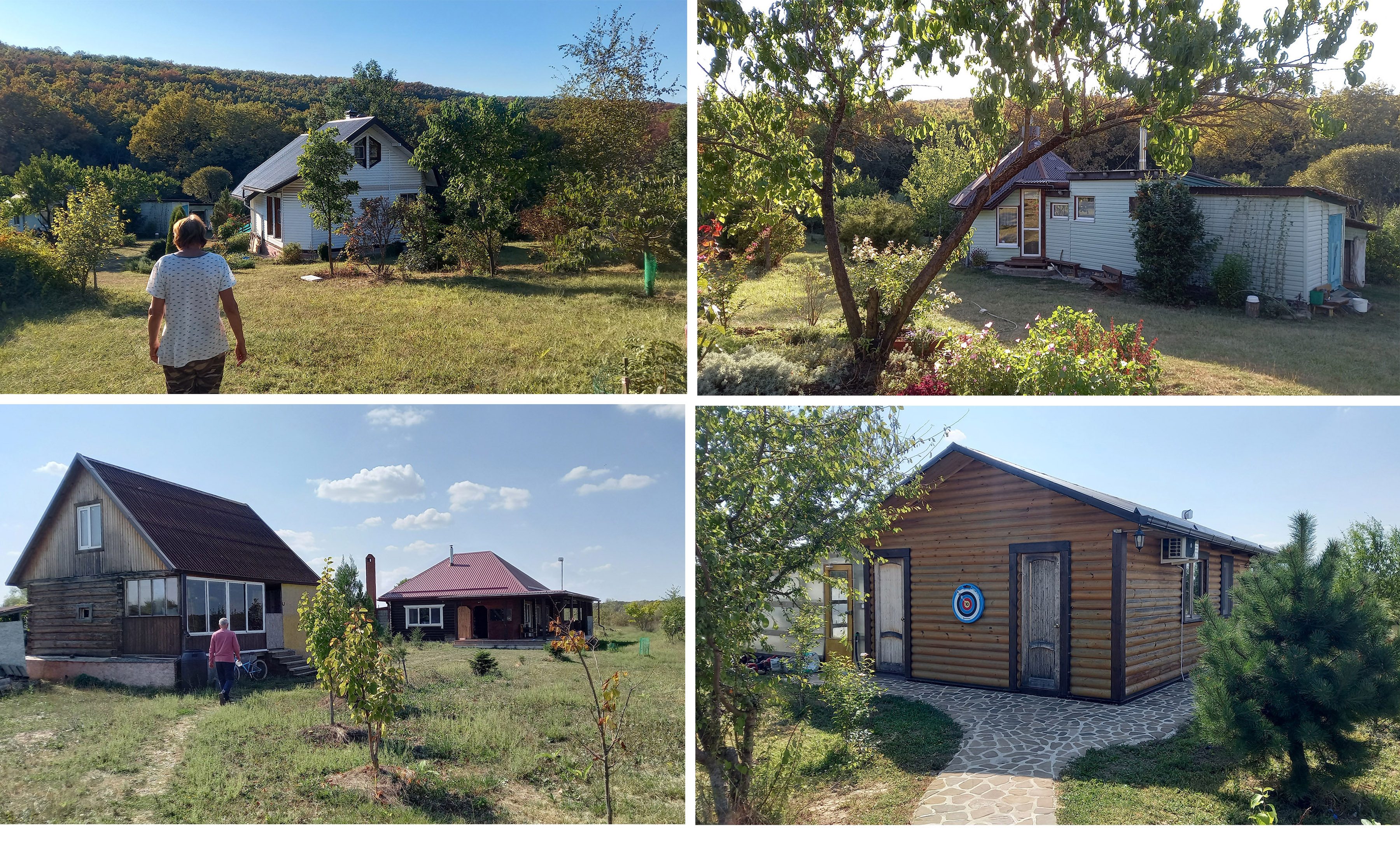
For those who have the resources, the skills, and the family support, this path offers something remarkable: a life of abundance, self-reliance, and deep connection to the land, without sacrificing the comforts that make family life easier, especially when children are involved.
Which Path Is Right for You?
These three stories represent three different approaches:
The Forest Hut – radical simplicity, minimal material needs, maximum closeness to nature. Suitable for a single person with minimal expenses and a source of income that doesn't require much infrastructure. Also suitable for those who genuinely don't mind sleeping under a tree. In the rain.
The House over the River – a balance between nature and modern conveniences on a small plot in a village. Suitable for families who want to live close to the land while still being part of a community, with access to schools and shops. Also suitable for those who appreciate a hot shower.
The Family Homestead – a comfortable house with all amenities on 1.5–2 hectares, with a large household providing food security and potential business income. Suitable for larger families with the resources and skills to manage a full-scale homestead. Also suitable for those who think "vacation" means "finally time to fix the fence."
There is no single "right" answer. The path that works for a single person seeking solitude may not work for a family with children. The path that works for an entrepreneur with a profitable business may not work for someone who needs to commute to a job in the city. The path that works for one season of life may not work for the next.
But here is what I've learned: common sense should be present in everything. A harmonious person has their head in the clouds and their feet firmly on the ground. Then your dreams and desires will coincide with your real possibilities – and you will avoid disappointment. Or at least, you'll avoid the really big disappointments.
If you have no experience living on the land, start small. Rent a house with a garden. Try growing your own vegetables. Spend a year or two discovering what you're truly capable of – before making a commitment you might not be able to keep. Your future self will thank you. Your future self might also laugh at your early attempts at composting. That's fine. Compost is forgiving.
The dream of living in harmony with nature is beautiful. But it becomes truly meaningful when it becomes real.
With warm regards,
Yuriy Ecominded , ecominded.net
P.S. I'd love to hear your thoughts – which path resonates most with you? Just hit reply and let me know. And if you've already found your own path, I'd love to hear about that too.
Leave your comment